How To Get A Distilling License In The United States | Breaking The Law Of Prohibition
Getting Your Distilling License: What You Need To Know
The smell of fermenting mash, the hum of the still, the promise of a perfectly crafted spirit, starting a distillery is a dream fueled by passion and entrepreneurship. That romantic vision hits a very cold wall of federal and state paperwork. Distilling is one of the most heavily regulated industries in the United States, an enduring legacy of the Prohibition era.
Simply put, you cannot legally operate a still for producing spirits without permission from the government. I’ve seen countless aspiring distillers get stuck in the regulatory quicksand, often wasting months and thousands of dollars because they didn't understand the sequential labyrinth of the licensing process.
The key pain point is that licensing isn't a single step; it’s a three-stage gauntlet involving Federal, State, and Local authorities, and you must complete them in the right order. My aim here is to provide you with the definitive, expert roadmap for how to get a distilling license in the United States.
Phase 1: The Foundational Pre-Application Strategy
Before you touch a single application form, you must lay a rock-solid foundation. This pre-application phase is the difference between a smooth 6-month approval process and a frustrating, multi-year delay. Competitors often skip this, but it’s the most crucial step for demonstrating the competence required for a highly regulated business.
Step 1: Define Your Business Entity And Location
Your legal structure dictates how you file taxes and liabilities. The federal TTB requires a legal entity, which means you must establish your LLC, Corporation, or other business structure with your state’s Secretary of State before you apply for a federal license.
You also need a fixed physical location. You cannot file a federal application without a specific address.
- Zoning is Non-Negotiable: Before signing a lease or buying property, check local zoning laws. Many municipalities prohibit distillery operations in residential or even certain commercial areas due to fire code regulations, storage requirements, and wastewater disposal. Zoning approval is a prerequisite for your state license.
- Physical Security: The TTB requires that your premises be secured to protect the distilled spirits, ensuring all entrances are lockable and all windows are screened or protected. Think of it as a fortress protecting highly taxed goods.
Step 2: The Critical Business Plan And Financial Backing
The TTB wants to ensure you are a legitimate operation capable of adhering to complex tax laws. A detailed business plan is your evidence.
- Surety Bond Requirement: This is a hidden financial prerequisite. You must obtain a Surety Bond, a form of insurance that guarantees the TTB that you will pay the required Federal Excise Tax. The bond amount is determined by the expected tax liability (how much alcohol you plan to produce), and the cost of the bond itself depends on your credit history. Without a bond in place, your TTB application will be rejected.
- Equipment Acquisition: While you don't need the still installed yet, the TTB application requires details on your equipment, including the capacity of your still and its schematic drawings. You need to have secured the financing and a purchase agreement for this equipment.
Step 3: Getting Your EIN And Registering With The IRS
The TTB is part of the Department of the Treasury, so tax compliance is everything. You need to obtain an Employer Identification Number (EIN)from the IRS, even if you plan to be a sole proprietor, as this number is required for all TTB forms. You must also register for all relevant federal tax types.
Phase 2: The Federal Gauntlet - The TTB Distilled Spirits Plant (DSP) Permit
The federal license to distill is called a Distilled Spirits Plant (DSP) Permit. This is the highest hurdle, as the TTB governs the legal productionof alcohol and the collection of Federal Excise Tax. The entire application is filed electronically through the TTB Permits Online system.
Step 4: Submitting Your TTB Application (The 5 Major Forms)
The TTB application is extensive, but it can be broken down into five core components that you must complete correctly.
- Application for Registration (TTB F 5110.41): This is the core application, providing ownership details, location, and the type of business activity (distilling, processing, or rectifying).
- Personnel Questionnaire (TTB F 5100.1): Every person involved in the ownership, management, or control of the business must submit this form, which includes background information and criminal history checks.
- Basic Permit (TTB F 5110.25): This grants the right to engage in the business of distilling and selling spirits.
- Diagram of the Premises: A detailed, accurate drawing of your floor plan, identifying all areas for production, storage, bottling, and any public areas (like a tasting room). The TTB needs to ensure the secured areas for taxed goods are clearly delineated.
- Surety Bond (TTB F 5110.51): The official proof that you have secured the bond guaranteeing tax payment. A bond with sufficient coverage is only required if you expect tax liability to exceed $50,000 in a calendar year. Most small craft distilleries operate below this threshold initially, avoiding bonding requirements. However, if your projected production requires bonding, arrange this before application submission; TTB won't approve without proper surety in place.
Step 5: The TTB Review And Interview Process
Once submitted, the TTB assigns a specialist to review your file. The current average processing time can range from 3 to 6 months.
- Critical Thought: The biggest slowdowns are often simple errors, like mismatched names between the Personnel Questionnaire and the Basic Permit, or incomplete background checks. Double-check every name and address.
- The Physical Inspection: Once the TTB approves the paperwork, a specialist will schedule a mandatory, in-person inspection of your proposed facility. They will verify that the premises match the submitted diagrams and that the security measures meet federal standards.
Step 6: Obtaining The Final DSP Permit
Upon a successful inspection, the TTB will issue your DSP Permit. This permit is crucial because it allows you to legally begin construction and installation of your still and equipment. You must have this federal permit before you can apply for your state liquor license, as state authorities will require proof of federal approval.
Phase 3: The State And Local Regulatory Labyrinth
With the federal hurdle cleared, you now face the task of complying with state and local laws, which govern sales, distribution, and taxationwithin state lines. State laws vary wildly in cost, complexity, and distribution methods.
Step 7: Applying For The State Liquor License
This is often the most expensive and time-consuming part of the process, as states want to control alcohol distribution and collect state-level taxes.
- State Liquor Authority: You must apply to your state’s Alcoholic Beverage Control (ABC) or State Liquor Authority. This application often mirrors the TTB application but focuses on compliance with state health, safety, and distribution laws.
- The 3-Tier System: Almost every state operates under a Three-Tier System (Producer, Distributor, Retailer). Your state license will dictate what you are allowed to sell and to whom.
Step 8: Securing Local Permits And Zoning Approval
Your final hurdle is the local authority. Your city or county government must grant local zoning approval (which you started in Phase 1) and any required local permits (e.g., health permits, fire permits, local sales tax registration).
The Crucial Insight: Local requirements can often be the hardest to predict. A seemingly trivial detail, like requiring a certain distance from a school or church, can kill a location that federal and state agencies approved. Talk to your local planning and zoning board early and often.
Application Timeline
Understanding realistic timelines prevents frustration and poor planning decisions. The TTB aims to process applications within 90 days, but this represents best-case scenarios for perfect applications. Most first-time applicants face questions, clarification requests, or documentation gaps that extend processing.
I typically counsel clients to expect 4-6 months from submission to approval for straightforward applications. Complex situations, multiple owners, unusual facility configurations, or locations in sensitive areas can push timelines to 9-12 months. The TTB processes applications in order received, but incomplete submissions restart the clock when additional information arrives.
During processing, the TTB may request additional information, schedule facility inspections, or raise concerns about specific aspects of your operation. Responding quickly and thoroughly to these inquiries accelerates approval. Delays in providing requested information extend your timeline proportionally.
Once approved, you must keep all approval documents readily available for examination by TTB officials. Your approval includes specific operating conditions and restrictions that form the legal foundation of your distillery operation.
See Also: How To Start A Distillery
What Is The Best State To Open A Distillery In?
Choosing your distillery location involves balancing regulatory friendliness, market access, production costs, and quality of life considerations. No single "best" state exists; the right choice depends on your business model, target market, and personal priorities.
States with established craft distillery industries generally offer more favorable regulatory environments. Colorado, Washington, Oregon, and Texas have developed streamlined processes and supportive regulations encouraging craft distillery development. These states understand the industry, process applications efficiently, and maintain clear guidelines for compliance.
Washington's micro distillery license allows for the production of 150,000 proof gallons per year, and requires that 50% of the materials used are grown in the state, creating opportunities for local agricultural partnerships while supporting reasonable production volumes for growing businesses. States offering tiered licensing based on production volumes provide room for growth without requiring immediate large-scale operations.
Tax structures significantly impact profitability. State excise taxes on distilled spirits vary enormously, from a few dollars per gallon to over $30 per gallon in some jurisdictions. Lower excise tax states let you price products more competitively or maintain higher profit margins. Research both state and local excise tax rates; some cities impose additional taxes beyond state rates.
Distribution access matters critically for growth beyond on-site sales. Control states, where government monopolizes distribution, present challenges for reaching consumers, while three-tier states with private distribution offer more flexibility. States allowing direct-to-consumer shipping expand market reach without navigating complex distributor relationships.
How Much Does It Cost To Start A Distillery?
Total startup costs for a commercial distillery typically range $250,000 to $2,000,000, depending on your scale, location, and business model. Most small craft distilleries launching with tasting rooms and direct sales fall in the $500,000-$750,000 range for complete buildout and first-year operations.
Equipment represents your largest single expense category. A modest production setup, including a 250-gallon still, fermentation tanks, storage tanks, and basic processing equipment, costs $150,000-$300,000. Quality matters here; cheap equipment leads to production problems, maintenance headaches, and potential safety issues. Plan for commercial-grade equipment meeting TTB and local fire code requirements.
Facility costs vary dramatically by location and whether you're leasing or purchasing. Most distilleries start in industrial spaces requiring significant renovation. Budget $100,000-$300,000 for leasehold improvements, including plumbing, electrical upgrades, ventilation systems, and fire suppression. Building codes for distilleries exceed standard commercial requirements due to flammable liquid handling.
Licensing and professional fees consume $10,000-$30,000 as discussed earlier. Don't shortchange this category; proper legal and consulting guidance prevents expensive mistakes and accelerates launch.
Inventory and raw materials require substantial working capital. You'll need grain, water, yeast, barrels, bottles, labels, and packaging supplies before generating revenue. Initial inventory investment typically runs $50,000-$100,000, depending on your production plan and product portfolio.
Marketing and branding deserve adequate funding. Label design, website development, tasting room design, and initial marketing campaigns cost $20,000-$50,000. Craft distilleries succeed partly on brand appeal, and professional marketing materials matter from day one.
Operating reserves for the first year are critical. Most distilleries don't achieve profitability immediately. Budget 12-18 months of operating expenses, including payroll, rent, utilities, and ongoing ingredient purchases. This reserve prevents cash flow crises during your launch phase when production ramps up but sales remain modest.
Insurance costs often surprise new distillers. Comprehensive coverage, including general liability, product liability, property insurance, and workers' compensation, typically costs $15,000-$30,000 annually for small operations.
Do You Need A License To Make Alcohol For Personal Use?
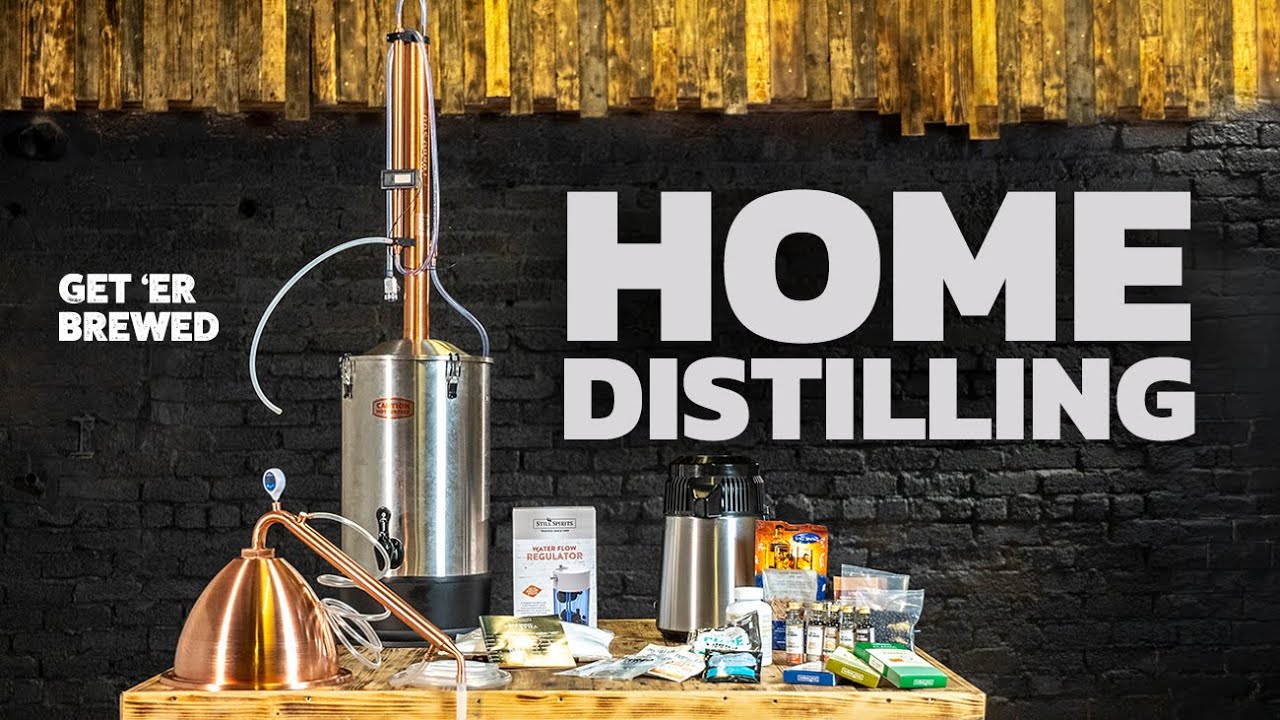
The licensing requirements differ dramatically between personal use and commercial production. Federal law allows individuals to produce beer and wine at home for personal consumption without licensing, but distilled spirits face different treatment under federal statutes.
Home distillation of spirits remains illegal under federal law regardless of intended use. The prohibition stems from tax enforcement concerns and historical public safety considerations. Distillation equipment can be dangerous in untrained hands, and the federal government hasn't created exceptions for small-scale personal production.
You cannot legally operate a still to produce spirits for personal consumption without federal permitting. This applies even to small amounts, non-commercial production, and situations where you never intend to sell your product. The law makes no distinction between commercial and personal distillation—all spirits production requires federal oversight.
If you're serious about distillation beyond hobby interest, obtaining proper licensing transforms your interest into a legitimate business opportunity. The process isn't simple, but it's manageable and opens possibilities for commercial success rather than limiting you to illegal personal production.
Common Mistakes To Avoid When Applying
I've watched numerous distillery applications fail or face major delays due to preventable mistakes. Learning from others' errors saves time, money, and frustration during your licensing process.
Starting Construction Before Securing Approvals
Starting construction before securing approvals ranks as the most expensive mistake. Entrepreneurs excited about their vision often sign leases, begin renovations, or order equipment before completing licensing. If your application faces rejection or requires facility modifications, you've invested enormous sums in unusable spaces or equipment. Always secure approvals before making irreversible commitments.
Inadequate Capitalization
Inadequate capitalization derails many promising distilleries. Applicants underestimate total costs, leaving insufficient capital for completing buildout or sustaining operations during the startup phase. Both federal and state regulators assess financial capacity as part of their review. Demonstrating adequate funding through financial statements and business plans strengthens applications and prevents mid-project cash shortages.
Incomplete Applications
Incomplete applications cause unnecessary delays. Missing documents, inadequate detail in floor plans, or vague operational descriptions trigger requests for additional information that restart processing timelines. Taking time to submit complete, thorough applications the first time dramatically accelerates approval.
Honesty Issues
Honesty issues destroy applications and create lasting problems. Attempting to hide disqualifying information, misrepresenting business relationships, or providing false financial information guarantees rejection when discovered. Background investigations reveal hidden information, and dishonesty on federal applications can result in criminal prosecution beyond simple application denial.
Ignoring Local Considerations
Ignoring local considerations causes preventable problems. Failing to secure zoning approval, neglecting community opposition, or overlooking local ordinances creates obstacles even if federal and state agencies approve your application. Engage local authorities early and address community concerns proactively.
Poor Record-keeping Habits
Poor record-keeping habits established during the application process often continue into operations. The TTB and state regulators expect meticulous records of production, sales, inventory, and tax payments. Developing strong record-keeping systems before operations begin prevents compliance violations and simplifies ongoing reporting requirements.
Underestimating Timeline
Underestimating the timeline creates business plan problems. Entrepreneurs often project revenue too soon, commit to equipment delivery dates, or sign employment agreements assuming quick approval. Building realistic timelines with an adequate buffer prevents cascading problems when approvals take longer than hoped.
Frequently Asked Questions
How Long Does It Take To Get A Federal Distilling License?
The TTB aims for 90-day processing times, but most first-time applications take 4-6 months from submission to approval. Complex situations involving multiple owners, unusual facilities, or locations in sensitive areas can extend timelines to 9-12 months. Incomplete applications restart processing when additional information arrives.
Can I Start My Distillery From Home?
Home-based distilleries face significant obstacles. Zoning restrictions typically prohibit alcohol production in residential areas, and neighbors often oppose commercial operations in residential neighborhoods. Fire codes for distilleries require specialized safety equipment uncommon in homes. Most successful distilleries operate from commercial or industrial spaces properly zoned for alcohol production.
What Disqualifies Someone From Getting A Distilling License?
Felony convictions, previous alcohol or tobacco violations, and certain financial issues can disqualify applicants. The TTB conducts background investigations on all principals with 10% or more ownership interest. Recent drug trafficking convictions, felonies involving fraud or violence, and previous federal permit revocations typically result in automatic denial.
Do I Need A Separate License For A Tasting Room?
Most states require separate licenses for manufacturing and tasting room operations. Some states offer combined licenses while others mandate distinct applications for production, on-premise consumption, and retail sales. Research your state's specific requirements; many distilleries need 2-4 different licenses depending on their business model.
Can I Operate While My Application Is Pending?
No. You must receive final approval from both federal and state authorities before beginning any production operations. Producing spirits while applications remain pending violates federal and state law, risking immediate shutdown, permit denial, and potential criminal charges. Complete all approvals before starting production.
What Happens If My Application Is Denied?
The TTB provides a written explanation of the denial reasons. You can address the issues and reapply, or in some cases, request administrative hearings to contest denials. Common denial reasons include inadequate financial resources, disqualified principals, or facility deficiencies. Correcting identified problems and resubmitting often succeeds on subsequent attempts.
How Much Insurance Do I Need For A Distillery?
Most distilleries carry $1-2 million in general liability coverage, $1-5 million in product liability insurance, and adequate property insurance covering buildings and equipment. Workers' compensation requirements vary by state, but are mandatory in most jurisdictions. Landlords and lenders often specify minimum coverage levels in lease agreements and loan documents.
Can I Sell Directly To Consumers In Any State?
Direct-to-consumer sales laws vary dramatically by state. Some states allow unlimited direct sales from distillery premises, others impose volume restrictions, and some prohibit direct sales entirely. Interstate direct shipping faces additional restrictions; most states prohibit shipping spirits directly to consumers, though some allow it under specific conditions.
What's The Difference Between DSP And A Basic Permit?
A Distilled Spirits Plant (DSP) permit authorizes production, processing, and storage of spirits at a specific facility. A basic permit, issued under the Federal Alcohol Administration Act, governs certain business practices and interstate commerce. Most distilleries need both the DSP permit for production operations and the basic permit for interstate business activities.
How Often Do I Need To Renew My Distilling License?
Federal TTB permits don't require renewal; they remain valid unless revoked or surrendered. State licenses typically require annual renewal with updated information and fee payment. Some states use biennial renewal cycles. Missing state renewal deadlines can result in license expiration and operational shutdown until reinstated.
Conclusion
Success comes from treating licensing as a marathon rather than a sprint. Start preparing documentation months before application submission. Build relationships with regulatory officials, take advantage of pre-application consultations, and seek professional guidance in navigating complex requirements.
The investment in proper preparation pays dividends through faster approvals and smoother ongoing compliance. Your licensing journey represents more than bureaucratic hurdles; it establishes the legal foundation for your distillery business. The discipline, attention to detail, and compliance mindset developed during licensing serve you throughout your operation.
Distilleries that take licensing seriously typically maintain better compliance, avoid costly violations, and build sustainable businesses thriving over decades rather than struggling through constant regulatory problems.
You Might Like: Technology Trends In The Distilling Industry